Fuel tanker capsizes off Ibiza: one sailor dead
- Source date
- Published on Tairix
- Updated on Tairix
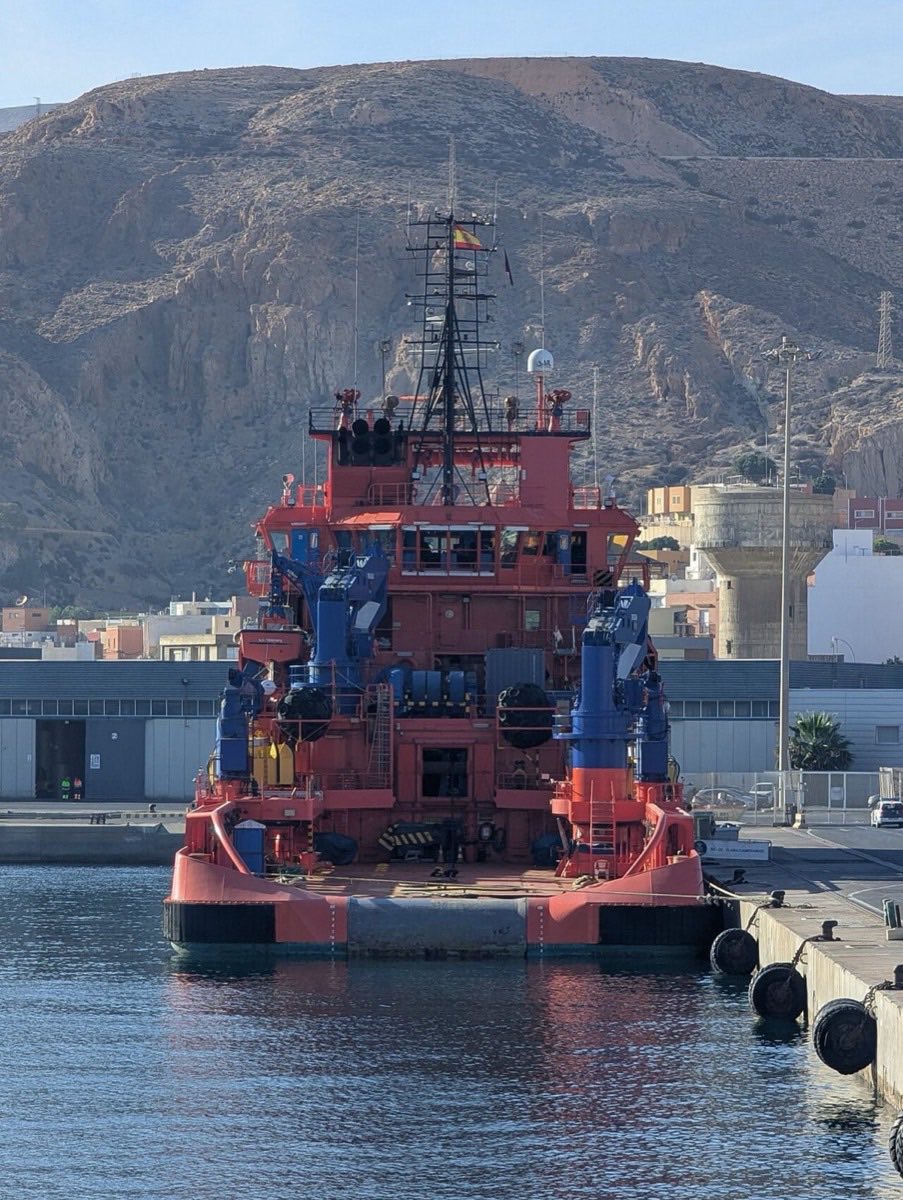
Overnight a tanker loaded with diesel capsized between Ibiza and the mainland. At first it was reported sunk, but in the morning it was found afloat, keel up. One of the 17 sailors died. A slick almost 5 km long was seen next to the ship during the day and had evaporated by the evening. The maritime authority says the tanks are intact. On Friday divers checked the hull, and the Marina Mercante ordered the tanker to be towed to Cartagena.
It all happened on the night of 25 to 26 November. The Med Emre, a 120-metre chemical tanker flying the Maltese flag, was carrying fuel from Algeciras to Barcelona. Ships take that same route past our coast every day. The hull sprang a leak, the tanker heeled over badly and the crew abandoned ship. Overnight everyone reported that she had sunk. But in the morning a Salvamento Marítimo plane found her still on the surface: the tanker has capsized and is floating keel up. Reports differ on when the distress call came in and on the exact spot, anywhere from 19 to 30 miles off Ibiza.

📍 All rescued but one
Rescuers pulled all 17 people out of the sea. Three Salvamento Marítimo helicopters flew in from Palma, Valencia and Tarragona, and merchant ships that happened to be nearby helped too. One sailor could not be saved and died at Can Misses hospital in Ibiza. He was a 46-year-old Turkish sailor, EFE and La Voz de Ibiza report, and his heart stopped. His name has not been released, but the owner, the Turkish company YMN, has confirmed he was the chief engineer. The judicial police are looking into the death. The crew were Turkish and Indian. Six were taken to hospitals on the island with hypothermia, and their condition is mild. A helicopter flew five to Valencia, and five more are fine and stayed on a rescue vessel.
📍 Will there be a spill
The big question is whether the fuel has leaked. The authorities estimate there are about 7,000 tonnes of diesel on board. La Voz de Ibiza worked that out at roughly 8.3 million litres, so the 1.2 million litre figure in some media doesn’t add up. By the afternoon the picture was clearer. Salvamento Marítimo found an oily slick 2.6 nautical miles long, about 4.8 km, next to the tanker. Valencia’s harbour master, Elena Delgado, says the cargo and fuel tanks are intact and the slick most likely comes from residues on board, because it hasn’t grown since it was spotted. The maritime authority calls it minimal. The Clara Campoamor, Salvamento Marítimo’s biggest ship for cleaning up oil, is standing by next to the tanker in case anything starts leaking.
📍 Where did the slick go, and what about the tanker
In the evening came good news: the slick is gone. Valencia’s harbour master, Elena Delgado, says a new overflight found no more pollution, as the slick had broken up and evaporated. The Balearic 112 service and Salvamento Marítimo confirmed the same. The Clara Campoamor has managed to fix a tow line to the upturned tanker, and Delgado says the situation is stable. The sea under the ship is about a kilometre deep. On Friday 27 November divers and technicians from Cartagena will inspect the hull. If all is well, the tanker will be towed to a port or a place of refuge, where the fuel will be pumped out. The Marina Mercante will decide which port. The owner, the Turkish company YMN, has already sent in a salvage plan, which is being studied. Why the ship rolled over so fast is still unclear. Delgado says she is not old, passed an inspection in Italy this year with no faults, and there is no structural damage to the cargo and fuel tanks. An independent marine accident investigation commission will look into the cause and interview the surviving sailors.
Spain has activated its national marine pollution plan at level 2, with the maritime authority, the Marina Mercante, in charge. The Balearic Islands declared a pre-alert of their own, level 0 under the PLATERBAL plan. The Ministry for the Ecological Transition has also activated the Plan Ribera to protect the coastline, just in case. The Valencia region has put its own emergency plan on pre-alert too and asked Salvamento Marítimo to model where a slick could drift over 24, 48 and 72 hours. It is purely a precaution: nobody has seen fuel on the shore. Balearic president Marga Prohens sent her condolences to the family of the sailor who died.
📍 What is happening with the tanker today
On Friday morning the Salvamento Marítimo tug María Zambrano set out to the tanker from the port of Sant Antoni, with divers and technicians from Cartagena on board. They are checking the hull above and below the water, looking for damage and measuring how deep the ship sits. That decides whether she can be towed. The night was calm, and the tanker is holding on the line from the Clara Campoamor without drifting. There are no inspection results yet, and the Marina Mercante will decide what comes next. Interior Minister Fernando Grande-Marlaska says the hull is intact and there is no risk of a spill, and Pedro Sánchez promises to move the ship to a safe port “in the coming hours and days”. Where to is still an open question. The owner has to propose a port of refuge, and the Marina Mercante has to approve it. The Balearic Islands won’t offer theirs: the regional government is against towing the tanker to any port in the archipelago, and Sant Antoni is only a base for the rescue teams. There is also a first theory about why she capsized. According to the captain, waves were up to 4 metres that night, and a lot of water may have got into the ballast tanks on the port side. On Friday the captain and three other crew members are giving statements in Cartagena to the independent body that investigates maritime accidents. Its main question is why the tanker heeled over and capsized so fast. The owner says the ship had passed all mandatory inspections and its certificates were valid, and it has handed the paperwork to the authorities. Actualidad Valencia reports that two sailors have already been discharged from Manises hospital in Valencia. By Friday evening the results of the hull inspection still hadn’t been announced.
📍 Where the tanker is going
On Friday evening it was settled. Divers checked the hull: it is intact, the ship is still afloat and she can be towed. The Marina Mercante has ordered the Med Emre to be towed to Cartagena, to the Escombreras dock. The authority says it is the only port in the area with enough depth, space and shelter, and where the fuel can be unloaded straight onto land. Towing starts right away while the weather is good. The tanker will be towed as she is, upside down. Valencia’s harbour master Elena Delgado says she could reach Cartagena on Monday, 30 November. No exact time has been given. In Cartagena about 7,000 tonnes of cargo and around 160 tonnes of the ship’s own fuel will be pumped out, and then the ship will be righted and repaired. That will take several weeks. Cartagena is in Murcia, south of Torrevieja.
📍 Why Murcia objects
Murcia is not happy about its new guest. Regional president Fernando López Miras is demanding that the government find another port, anything but Cartagena. He says the roughly 8,000 tonnes of diesel on board are a risk to the coast and to marine life. He points out that Cartagena has ten protected natural areas and that about 40% of Spain’s fuel supply goes through Escombreras. The cargo figures don’t quite match: the Marina Mercante speaks of 7,000 tonnes of cargo and 160 tonnes of the ship’s fuel. The decision belongs to the ministry, and so far it hasn’t changed.
📍 And what about us
Ibiza is the closest Balearic island to us, about 90 km by sea from Dénia. According to EFE, the tanker lies about 58 miles from Jávea. During the day the slick drifted slowly east, along the north coast of Ibiza, so away from us, and by the evening it was gone. Nobody has forecast fuel reaching any coast, and no beaches have been closed. As long as the loaded tanker is still at sea the risk remains, so it is being watched closely. Diesel is lighter than crude oil and partly evaporates, but it still harms fish, birds and posidonia seagrass. If you spot dark patches or sticky lumps on the beach, don’t touch them, keep children and dogs away and call 112. We are following the story and will add every update here.
Original source: elDiario.es ↗