Voyager 1 is now one light-day from Earth
- Source date
- Published on Tairix
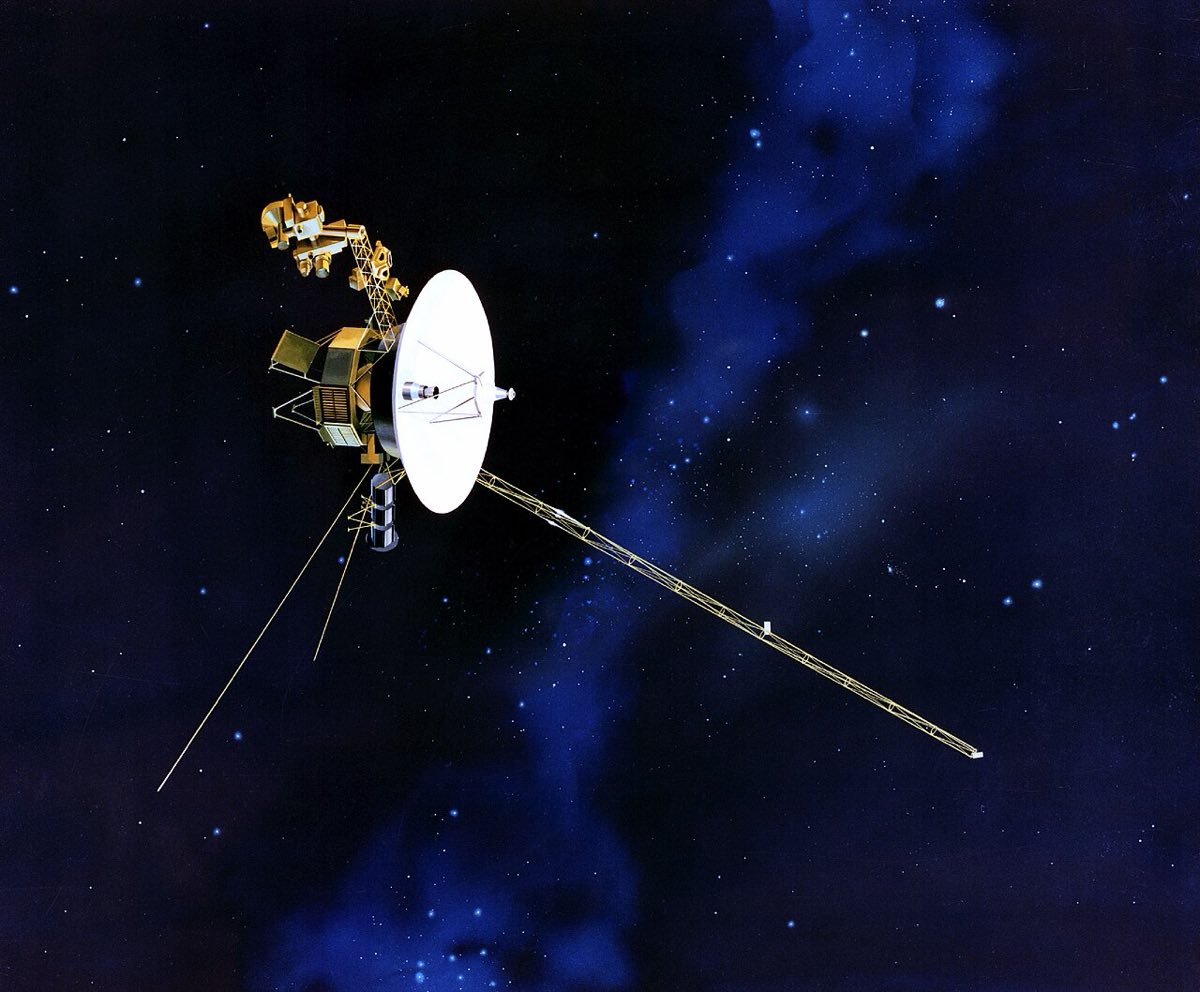
On 18 November the NASA probe launched in 1977 reached a point so far away that light and radio signals take a full day to reach it, about 26 billion km. To mark it, the Empire State Building was lit in gold, like the famous record on board.
Voyager 1 was launched in 1977 to study Jupiter and Saturn and in 2012 became the first human-made craft to enter interstellar space. According to NASA, on 18 November 2026 it reached one light-day from Earth, more than 25.9 billion km. It is the most distant object ever made by humans: the team sends it a command and waits almost two days for a reply.
📍 Golden light for the probe
NASA invited everyone to flash Voyager’s call sign “VGR” in Morse code with their phone torch after sunset on 17 November, creating a symbolic golden wave around the planet. The Empire State Building in New York was lit in gold this week: the colour of the gold-plated copper record that Voyager carries as a message to any civilisation that finds it, with 115 images, natural sounds, music from different eras and greetings in 55 languages. On 19 November the Jet Propulsion Laboratory (JPL) hosted a discussion with the mission team, and NASA is preparing a documentary for the mission’s 50th anniversary in 2027.
The old-timer is still being temperamental: according to Good News Network, on Tuesday the probe stopped sending science and engineering data, but its carrier signal is still being received on Earth, meaning the antenna points at Earth and the transmitter works, and engineers are looking for the cause in the onboard computer. Most instruments were switched off long ago to save power. The team hopes to stay in touch until about 2036, when Voyager 1 will move out of reach of the Deep Space Network antennas.
Original source: NASA ↗