38 days in tents: the end of the Puerta del Sol camp
- Source date
- Published on Tairix
- Updated on Tairix
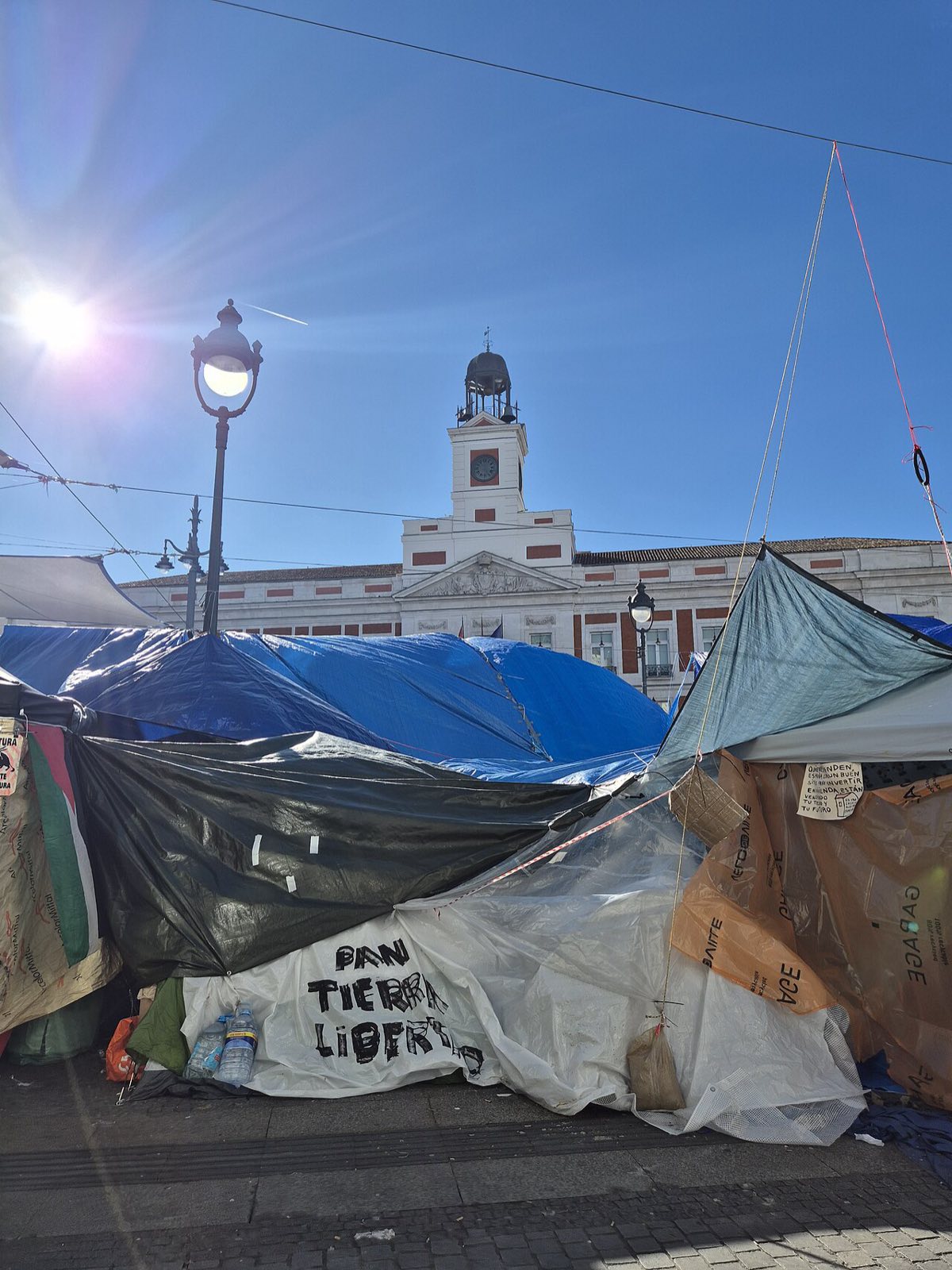
In the early hours of 3 November police took down the tent camp on Madrid’s main square, where people protesting against unaffordable housing had lived for 38 days. By noon the square had been washed and almost 36 tonnes of rubbish removed. How it began, how it ended and what Spain faces on 11 November.
At around three in the morning on Tuesday 3 November, 400 police officers — National Police together with the city force — moved into Puerta del Sol. Within a few hours they had taken down a camp that had stood for 38 days in the very heart of Madrid, right under the clock that all of Spain watches on New Year’s Eve. By noon the square was empty and clean, as if nothing had happened.
📍 How it all began
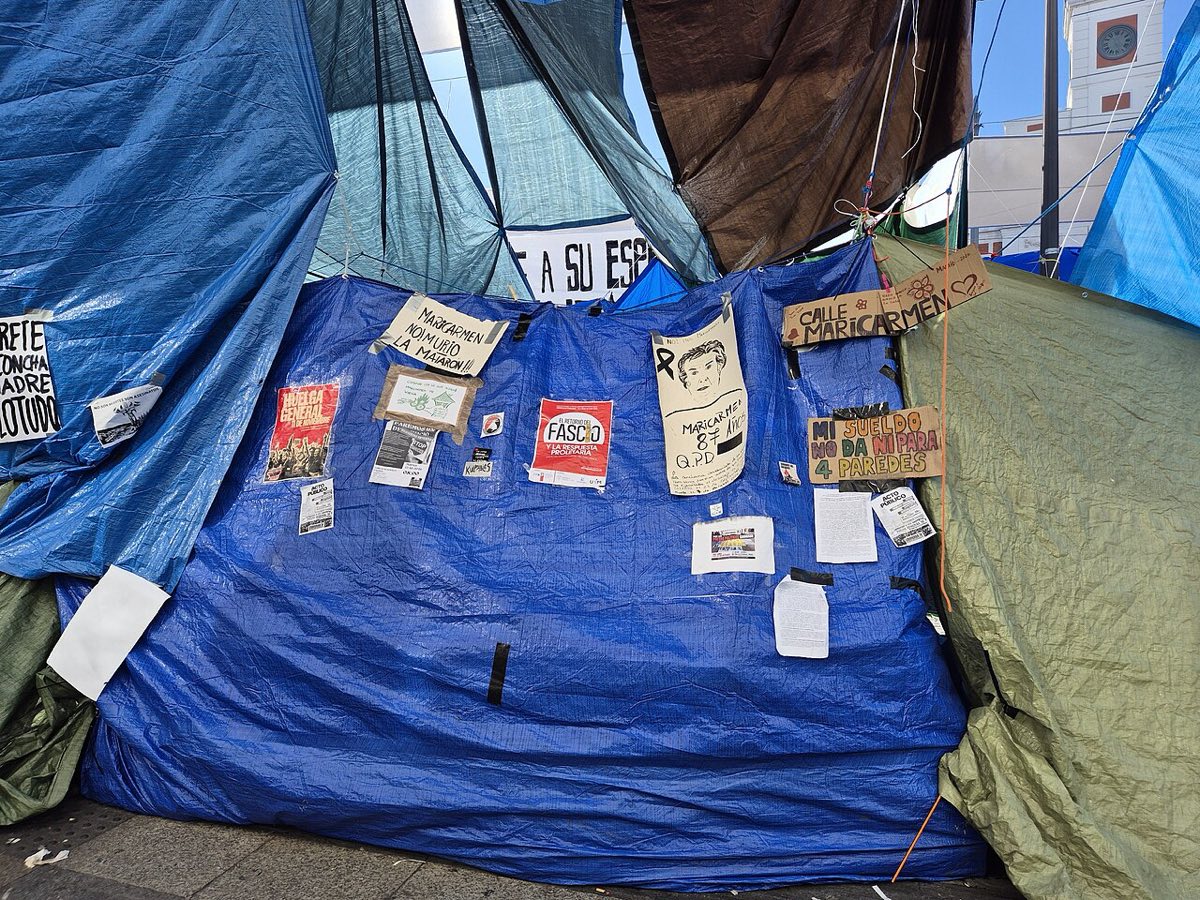
It all started with 87-year-old Maricarmen. On 23 September she was evicted from her rented flat in the Retiro district, and her story became a symbol of the housing crisis for many people. On 26 September a big march for affordable housing went from Sol to Congress. Counts differ: the Government Delegation said 25,000, the organisers 300,000. That evening some of the marchers did not go home but pitched tents right on the square.
Within days it had become a real tent town: at its peak around 1,800 tents and some 2,000 people living there. The demands were ones any tenant would understand: lower rents, no more evictions, more social housing and help for people sleeping rough.
📍 Who was left at the end
By late October the activists had begun packing up on their own. On 31 October most of the camp’s committees announced they were moving to the neighbourhoods to prepare a general strike. But the tents did not empty: they were left to people who simply had nowhere else to go. According to Qué!, around 90% of those whose papers were checked on the night of the eviction were homeless.
📍 The night of the eviction
By three in the morning about 150 tents were left. Police checked the papers of 334 people and arrested two for resisting. Luz Mila, 71, one of the camp’s residents, told Infobae she was taken out amid shouting and shoving in the middle of the night, with the temperature at about five degrees.
From here the accounts differ. The organisers speak of blows and pepper spray. The Government Delegation calls the eviction a last resort after several warnings and insists there was no violence. SAMUR paramedics helped five people, and one was seriously hurt — according to the operation’s balance, struck by a cleaning machine.
📍 The morning after
As soon as people had been led out, around 50 city cleaners moved in with excavators and refuse trucks. Almost 36 tonnes of tents, belongings and rubbish were removed — more than is collected here after New Year’s Eve (around 34 tonnes). The tents went to municipal depots, where their owners can collect them.
Madrid mayor José Luis Martínez-Almeida reckons nearby shops lost more than €30 million over the 38 days, and the city says it will recover every euro spent on the clean-up. Madrid regional president Isabel Díaz Ayuso blamed the central government for leaving the camp alone for so long.
📍 What comes next
The camp is gone, but the protest is not over. A 24-hour general strike across Spain, in the public and private sectors, has been called for Wednesday 11 November. It is backed by CCOO and UGT together with CGT, CNT, Intersindical Valenciana and tenants’ unions. They want higher wages, more affordable housing, a brake on rents and an end to evictions.
For the rest of us, this means transport, schools and public offices may run on minimum services on 11 November. If you have a trip, a doctor’s appointment or official paperwork that day, check in advance. Rail workers are also striking on 10, 12 and 17 November.
📍 And in Alicante?
In early October Alicante got its own housing protest camp too, on Plaza de la Montañeta, a couple of steps from El Corte Inglés, ESdiario reported. There have been no reports of it being cleared so far. We are watching and will let you know if anything changes.
Original source: Qué! ↗