In short
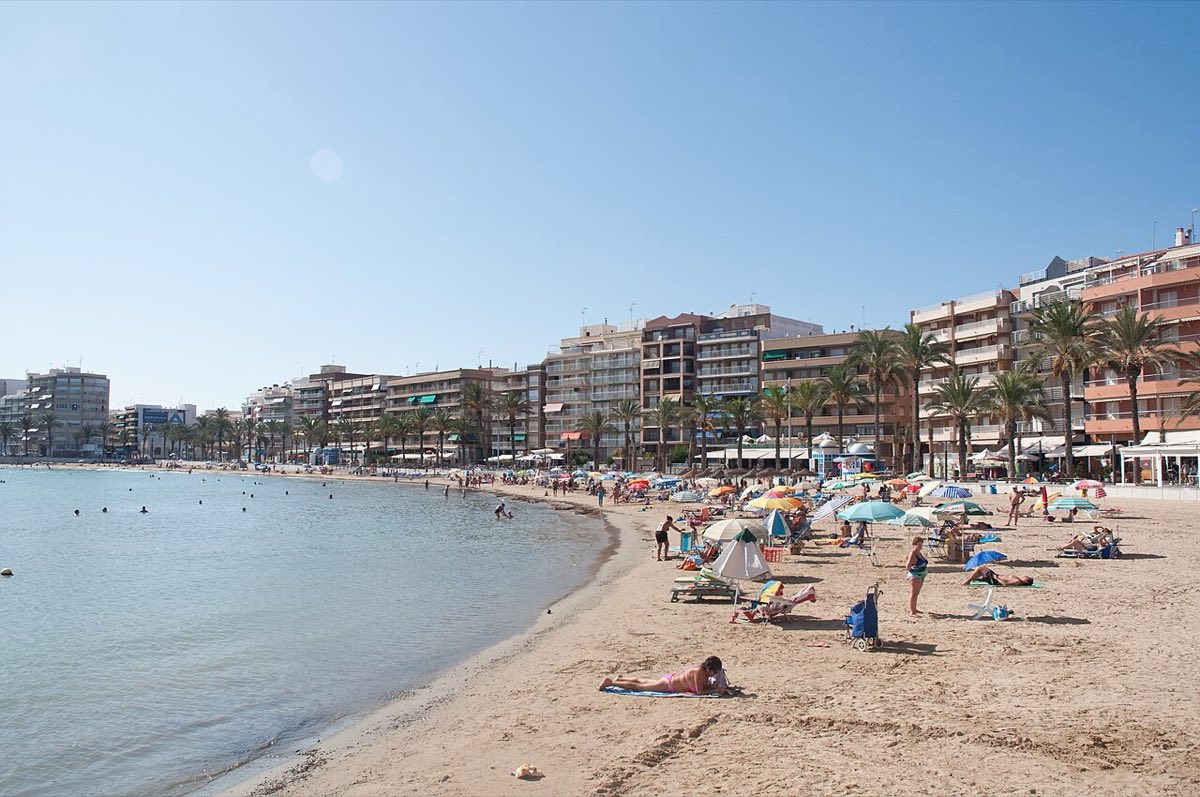
People who come to Torrevieja after Valencia, Alicante or Andalusian cities are often surprised: there are hardly any old quarters, the streets are straight, the buildings are plain and packed together, and there are few parks. There are clear reasons for this. The old town was destroyed by the 1829 earthquake and rebuilt on a rectangular grid. The town has little land, squeezed between the sea and two salt lagoons. And almost everything you see today was built in the last fifty years, quickly and mostly as holiday homes.
A town rebuilt from scratch in 1829
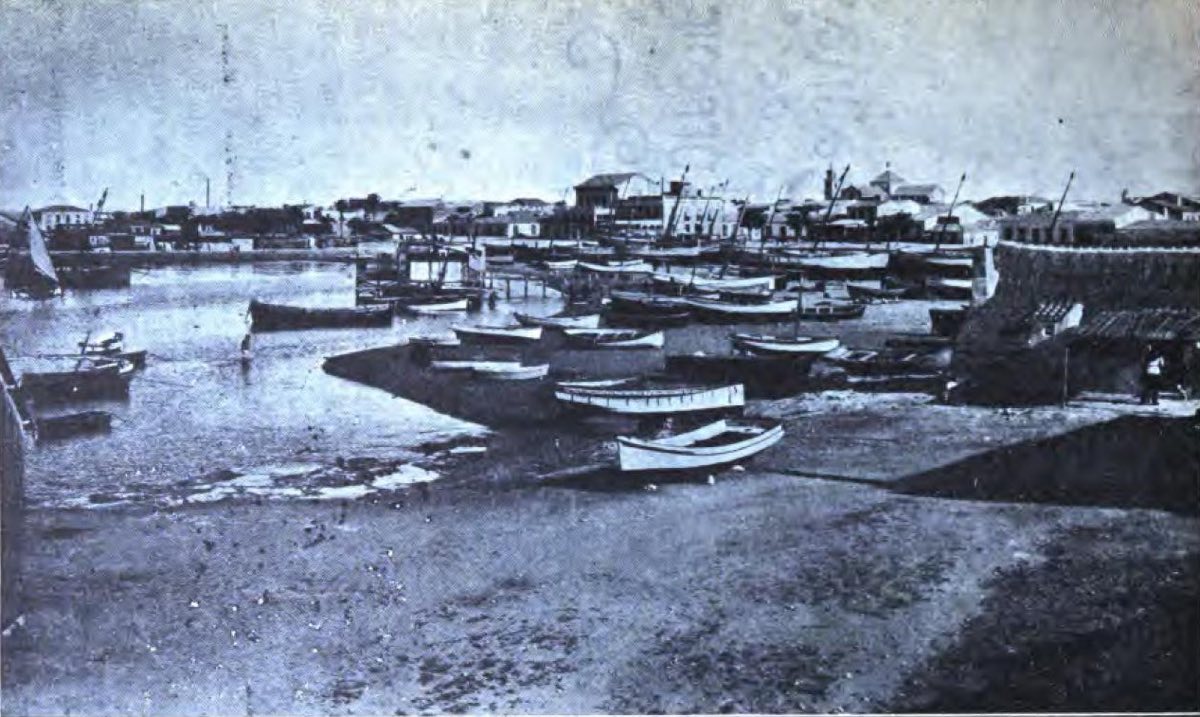
On 21 March 1829 Torrevieja was the epicentre of one of the most destructive earthquakes in Spain’s history. According to Spain’s National Geographic Institute (IGN), intensity here reached IX–X, the magnitude is estimated at 6.6, more than 800 people died in the region and at least 53 towns and villages were damaged. The salt workers’ village practically disappeared.
It was rebuilt to plans by the engineer José Agustín Larramendi: a rectangular grid of wide straight streets and low houses, so that the next tremor would claim fewer lives. That is why central Torrevieja has none of the winding medieval lanes, town walls or old cathedrals found in other Spanish towns. The grid survives, but in the 20th century the single-storey houses were almost everywhere replaced by blocks of flats.
A salt town squeezed between the sea and the lagoons
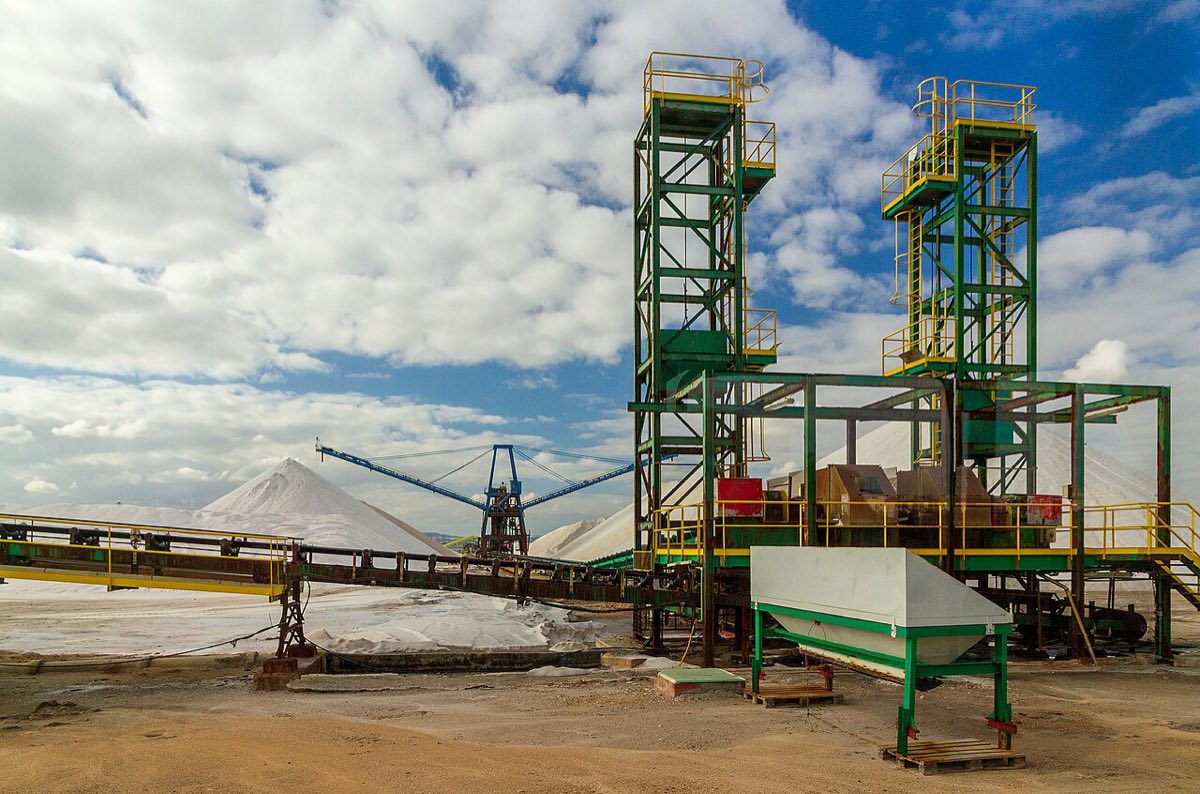
Torrevieja grew around salt production and its port, not around a castle, a bishopric or a wealthy market like many old Spanish towns. It was a modest working village, so it never built the palaces and mansions that adorn other towns today.
The second reason for the density is geography. On one side is the sea, on the other the La Mata and Torrevieja Lagoons Natural Park: the pink and green salt lakes with a belt of pine woodland where building is not allowed. The town could only grow along the coast and into the few gaps left, hence the dense building. On the other hand, Torrevieja’s largest green spaces are not town parks but the lagoons’ natural park, which is well worth a walk.
A 9.5-fold growth in fifty years, driven by holiday homes
According to a University of Alicante study (EURE journal, 2016), Torrevieja had 9,654 inhabitants in 1960 and 90,097 in 2011 — 9.5 times more. From 1960 to 1971 the population barely changed (up 171 people), but from the 1970s Torrevieja became the leading holiday resort of the Valencian Community: flats and houses were bought as holiday homes, mainly by Spaniards from inland regions and later by foreigners. Today, according to the town hall, more than 110,000 residents are registered.
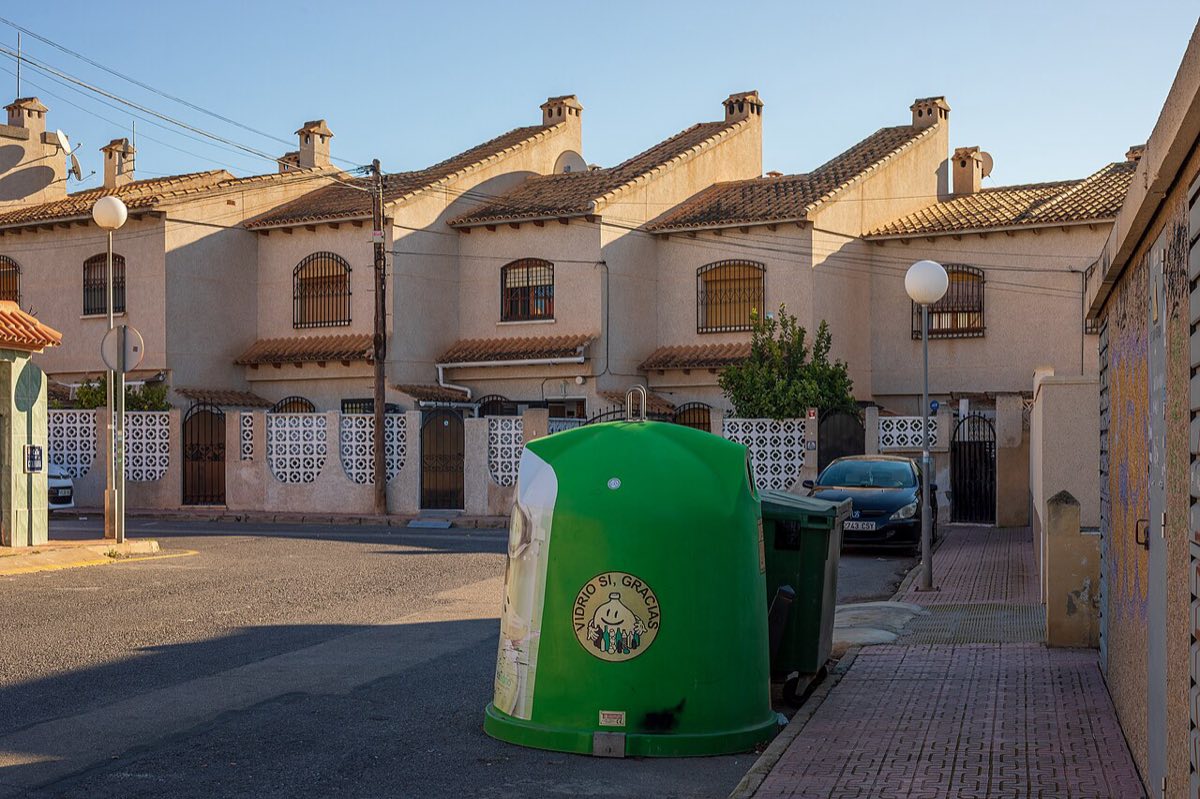
Our view. When a village of 10,000 grows into a town of 100,000 in one or two generations, building is fast and economical. Neighbourhoods were designed by developers rather than the town, and designed to sell a “flat by the sea for the holidays” rather than for year-round life: as many homes as possible per plot and only the public space the rules of the time required. Hence Torrevieja’s typical 1970s–80s blocks along the sea and its huge estates of identical bungalows.
Why the houses are stuck together
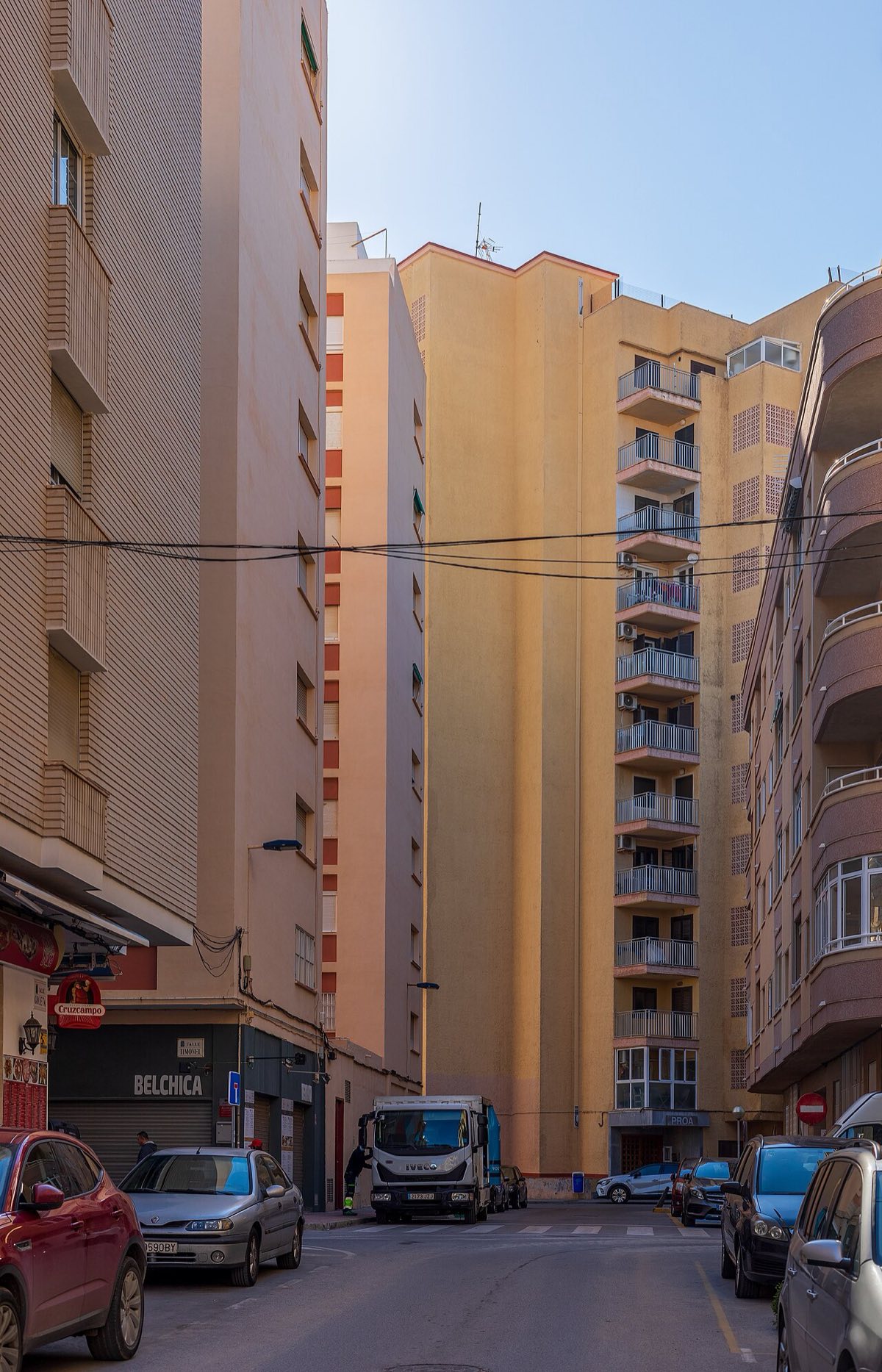
It is not only townhouses that stand wall to wall — blocks of flats do too. In the centre, on the rectangular blocks, apartment buildings line the street in a continuous row, wall to wall with no gaps between them (in Spanish the shared side wall is called a medianera). That is why central streets look like corridors of façades, with courtyards hidden inside the block.
Outside the centre there are townhouse estates — adosados in Spanish, houses that share walls — and there are a great many of them. According to a University of Alicante study (2014), townhouse estates take up 36.3% of Torrevieja’s built-up area — more than 5.6 million m², one of the highest shares on the Alicante coast. They started to appear in the 1960s and 70s, and especially many were built during the property boom from the mid-1990s.
Our view. A shared wall is cheaper for both the developer and the buyer: fewer façades, less land per flat or house, more homes per plot. For holidays the format works, but for living all year round it is worth checking sound insulation through shared walls, orientation — in continuous rows many flats only have windows on one side — and how much greenery there is nearby.
Why there is little greenery — and what is changing
In a fast-growing resort, parks long came second: a dry climate, costly irrigation and building that used every free plot for housing. The town hall is now catching up. In May 2025 it signed a 15-year parks and gardens contract: according to El Periòdic, the town maintains 362 public spaces covering about 1.2 million m², more than 2 million m² under the new contract, and more than 90,000 m² of new green areas and more than 15,000 trees are promised in the coming years.
The seafront is changing too. The Los Locos beach promenade is becoming a two-level pedestrian boulevard with trees and planted terraces (works until 2028), a full redevelopment project has been commissioned for the streets of Torreta Florida, and the former railway has become the Vía Verde for walking and cycling. Torrevieja is unlikely ever to look like an old Spanish town — but it can become far more pleasant to live in.
What this means if you are choosing a home
- The Larramendi grid in the centre means blocks of flats, shops and everything close by, but little greenery and lots of traffic; check the floor, street noise and whether there is a square nearby.
- Bungalow and townhouse estates mean your own entrance and terrace and a shared pool; check sound insulation through shared walls, sun orientation, the state of communal areas and community fees.
- If greenery matters, look at areas near the lagoons and La Mata pine woods, near the Vía Verde and the larger parks, and ask the town hall what works are planned near the property.